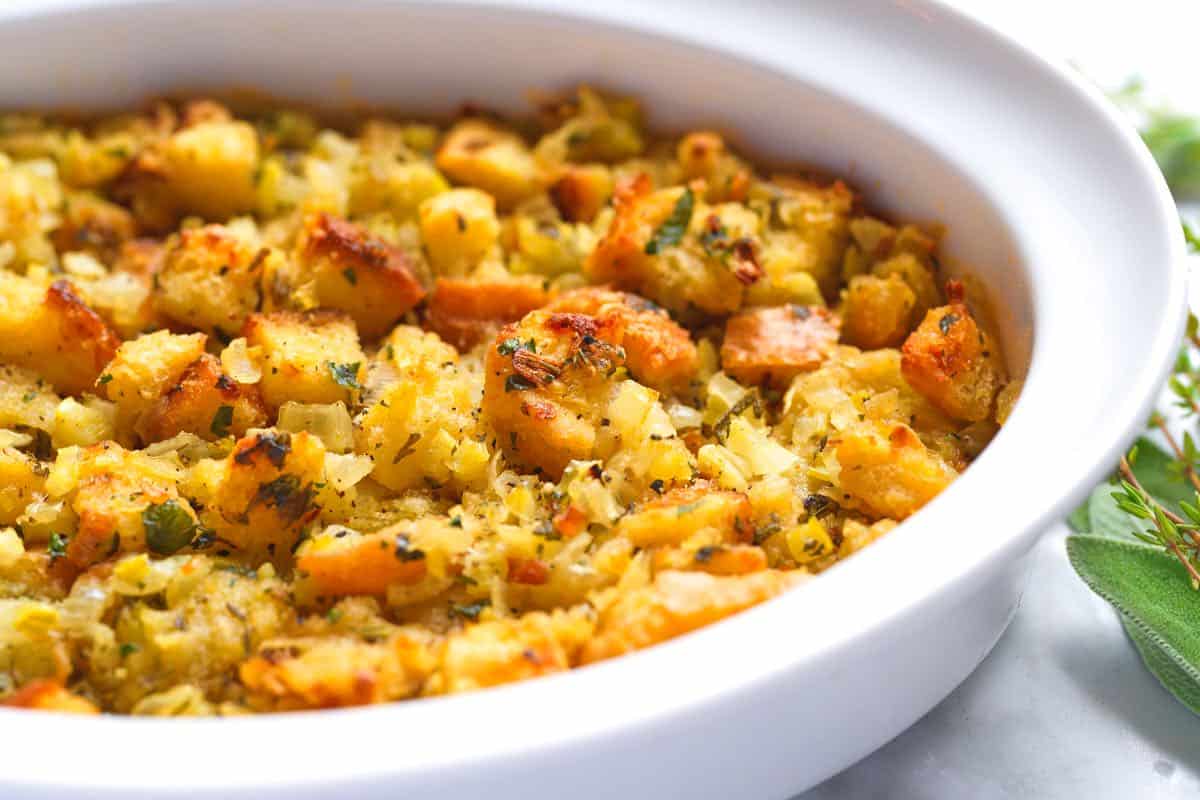
The aroma of a perfectly roasted turkey is undeniably the star of any holiday feast, especially Thanksgiving. Yet, for many, the true highlight, the most anticipated side dish, remains a beautifully crafted herb stuffing. But how often have you encountered a stuffing that promises perfection only to deliver a soggy, uninspired mess? The quest for the ultimate, never-soggy herb stuffing can feel like a culinary challenge, but we’re here to share the secret to achieving that golden, crispy exterior and moist, flavorful interior every single time. Get ready to elevate your holiday table with a homemade stuffing that will have everyone asking for your recipe.
The Quest for the Perfect Herb Stuffing: No More Soggy Sides!
For years, the battle against bland, mushy stuffing has plagued home cooks. The traditional methods often left much to be desired, resulting in a side dish that was either too wet or oddly dry in places, never quite hitting that sweet spot of balanced texture and robust flavor. This year, put an end to the disappointment. Our easy herb stuffing recipe focuses on simple techniques and a thoughtful approach to ingredients, ensuring a holiday side dish that’s bursting with savory herbs and boasts an exceptional, never-soggy texture.
The beauty of homemade stuffing lies in its ability to be truly customized to your family's taste. While store-bought stovetop varieties offer convenience, they simply can't compare to the depth of flavor and satisfying texture of a fresh, from-scratch dish. This recipe leverages classic flavors – fragrant poultry seasoning, aromatic thyme, and a hint of black pepper – combined with fresh aromatics to create a foundational taste that embodies the spirit of traditional holiday cooking. Even better, we’ll guide you through the one crucial step that guarantees a stuffing that stands tall, not slumps.
Crafting Your Easy Herb Stuffing: The "Never-Soggy" Method
Achieving that coveted crunchy-on-the-outside, tender-on-the-inside stuffing isn't rocket science, but it does hinge on one critical preparation step often overlooked: the bread. This seemingly minor detail is the linchpin to preventing a soggy disaster and unlocking true stuffing perfection.
The Secret to Non-Soggy Stuffing: Perfectly Dried Bread
The primary reason stuffing turns out soggy is bread that hasn't had its moisture content properly reduced. Fresh bread, while delicious, acts like a sponge, absorbing too much liquid and turning into a gummy consistency during baking. The goal is to dry out the bread pieces so they can soak up the flavorful broth without collapsing into mush. You have a few options for achieving this:
- Air-Drying (The Patient Method): Cut your bread into 1-inch cubes a day or two in advance. Spread them out on a baking sheet or clean kitchen towels and leave them on your countertop. This allows the bread to naturally release moisture over time.
- Oven-Drying (The Quick Method): If you're short on time, this is your best friend. Preheat your oven to 350°F (175°C). Spread the bread cubes in a single layer on a baking sheet. Bake for about 10-15 minutes, tossing once, until they are lightly golden and firm to the touch. Let them cool completely before proceeding.
Using store-bought dried bread cubes can also be a fantastic shortcut, eliminating this step entirely while still giving you the ideal texture foundation for your herb stuffing.
Essential Ingredients for Flavorful Herb Stuffing
Once your bread is ready, the rest comes together with ease. Here’s what you’ll need to create a truly memorable stuffing:
- Dried Bread Cubes: About 10-12 cups, preferably white or sourdough bread for a classic taste.
- Butter: Unsalted, for sautéing and richness.
- Aromatics: Finely diced celery and onion (and optionally, minced garlic for an extra layer of flavor).
- Herbs & Spices: Poultry seasoning (a blend of sage, thyme, marjoram, rosemary), additional dried thyme, seasoned salt, and freshly ground black pepper. For a more robust flavor, consider adding fresh sage and rosemary too.
- Broth: Chicken or vegetable broth, the foundation of moisture and flavor.
- Egg (Optional): One beaten egg can help bind the stuffing together, especially if you prefer a slightly denser texture.
- Olive Oil (Optional): A splash alongside butter can help prevent butter from burning and adds a subtle fruitiness.
Step-by-Step: Assembling Your Herb Stuffing Masterpiece
- Prep Your Oven: Preheat your oven to 375°F (190°C) for baking the stuffing. If you're oven-drying your bread, do that first and let the oven come back to temperature.
- Sauté the Aromatics: In a large skillet or stockpot, melt butter (and olive oil, if using) over medium heat. Add the diced celery and onion (and garlic, if using) and cook, stirring occasionally, for about 5-7 minutes until softened and translucent.
- Infuse with Herbs: Stir in the dried thyme, poultry seasoning, seasoned salt, and black pepper. Cook for another minute until fragrant, allowing the heat to bloom the spices.
- Combine & Moisten: Place your dried bread cubes in a very large bowl. Add the sautéed vegetable and herb mixture. Pour in the broth, starting with about half the recommended amount and gradually adding more until the bread cubes are evenly moistened but not saturated. If using, gently fold in the beaten egg. The goal is for the bread to be damp but still hold its shape.
- Prepare for Baking: Lightly grease a 13x9-inch baking dish. Spoon the well-mixed stuffing into the dish, spreading it evenly. Don't press it down too firmly, as a looser pack allows for better air circulation and crisping.
- Bake to Perfection: Bake for 35-45 minutes, or until the stuffing is heated through, the top is beautifully golden brown, and the edges are slightly crispy. If it starts to brown too quickly, you can loosely tent it with foil.
Beyond the Basics: Customizing Your Traditional Herb Stuffing
While our foundational herb stuffing recipe is exceptional on its own, one of the greatest joys of homemade cooking is the ability to personalize it. Consider these additions to make your stuffing uniquely yours:
- Additional Fresh Herbs: Beyond thyme, incorporate fresh sage, rosemary, or flat-leaf parsley for a brighter, more complex herbal profile.
- Savory Add-ins: Cooked and crumbled sausage (pork or turkey), sautéed mushrooms, chopped water chestnuts, or even finely diced apples can add wonderful texture and flavor dimensions. For a richer, more umami depth, consider adding a sprinkle of Parmesan cheese.
- Different Bread Varieties: While white bread is traditional, a good quality sourdough, challah, cornbread, or even whole wheat bread can introduce new textures and flavors. Just ensure they are properly dried.
- Nutty Crunch: Toasted pecans, walnuts, or chestnuts can provide a delightful crunch and earthy flavor.
A Culinary Journey: Exploring Regional Stuffing Traditions
Did you know that "stuffing" is a broad term encompassing a fascinating array of regional variations across the United States? What's considered traditional in one area might be entirely different in another. Our classic herb stuffing recipe, with its earthy bread base and savory herbs, aligns closely with the hearty versions found in the Northern US and Midwest.
However, venture further south, and you might encounter regional stuffing guide: US Thanksgiving traditions & classic flavors that diverge significantly. In the Carolinas, a rice dressing often takes center stage. The Deep South frequently favors cornbread dressing, sometimes enhanced with smoked meats like andouille sausage or bacon, or even unique oyster dressing. Out West in California, sourdough bread offers a tangy twist, while the Southwest boasts unique corn-based tamale stuffings with pork and chilies. Understanding these variations highlights the rich tapestry of American culinary traditions and underscores the versatility of this beloved holiday side. Our recipe provides a fantastic foundation that can even inspire you to explore these diverse regional flavors.
Tips for Stuffing Success and Making Ahead
- Don't Overmix: When combining the bread, vegetables, and broth, toss gently. Overmixing can break down the dried bread cubes, leading to a mushier texture.
- Taste as You Go: Before baking, taste a small amount of the mixed stuffing. Adjust seasonings like salt and pepper as needed. Remember, flavors will intensify slightly during baking.
- Make Ahead: You can prepare the stuffing mixture (up to step 4) a day in advance. Store it covered in the refrigerator. On Thanksgiving Day, simply transfer to your baking dish and bake as directed, adding an extra 10-15 minutes to account for the chilled temperature.
- Reheating: Leftover stuffing can be reheated in the oven at 300°F (150°C) until warmed through, usually about 20-30 minutes. Adding a splash of extra broth before reheating can help keep it moist.
- Crispy Top Tip: For an extra-crispy top, you can dot the surface with a few small pats of butter before baking, or even finish it under the broiler for a minute or two (watch carefully!).
Say goodbye to disappointing, soggy stuffing forever. With this comprehensive guide and our easy herb stuffing recipe, you're now equipped with the knowledge and techniques to create a holiday side dish that truly shines. The secret lies in the simple, yet crucial, step of properly drying your bread and building layers of incredible flavor with fresh aromatics and classic herbs. This year, your herb stuffing will be a testament to your culinary prowess, a side dish so spectacular it might just steal the spotlight from the turkey. It's not just a recipe; it's a promise of never-soggy perfection, a classic tradition made simple.
For more amazing holiday recipes, including other delicious side dishes, check out our guide on Classic Homemade Herb Stuffing: A Must-Make Thanksgiving Side Dish.
